Tag: health

  • Home Essentials for a Peaceful Life: Beyond Furniture and Things

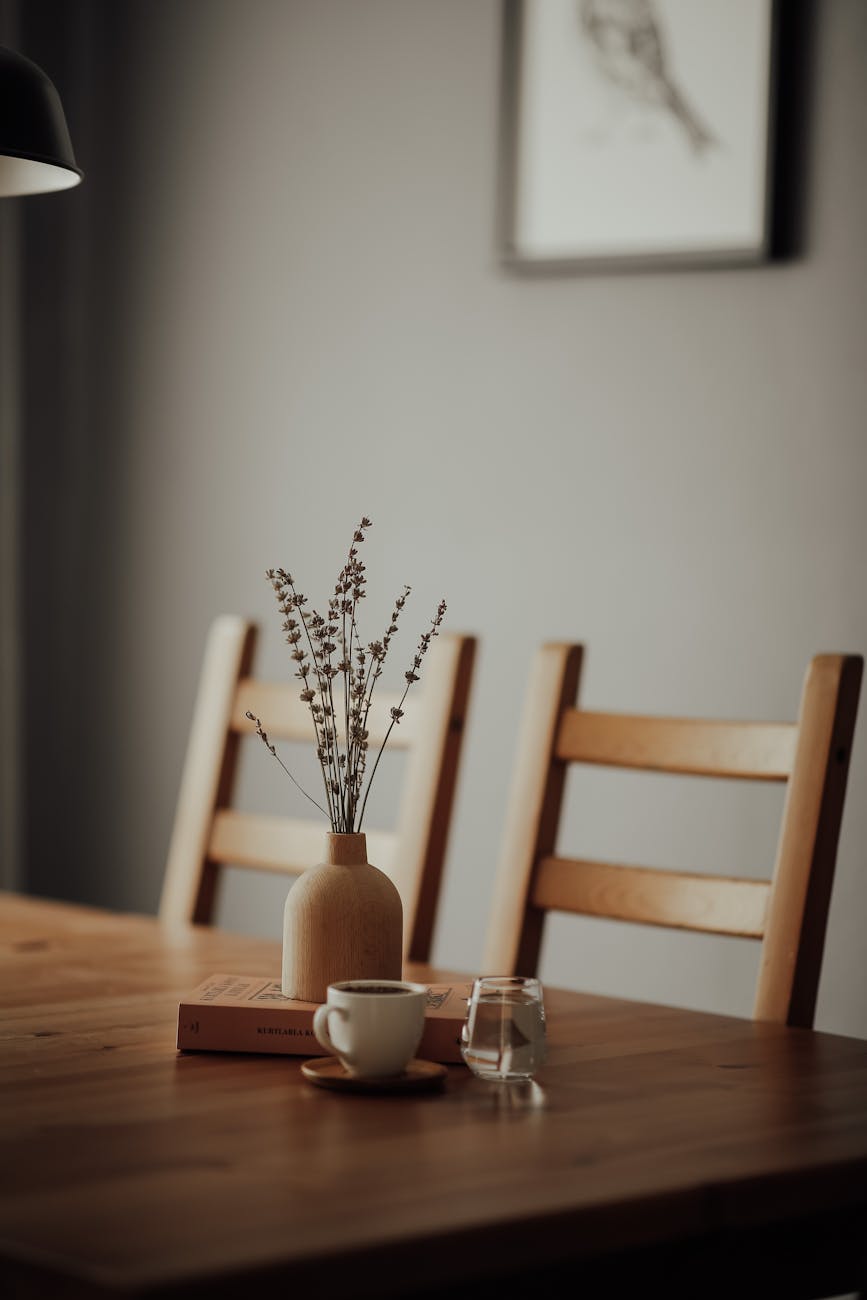
    Photo by Leyla Ku0131lu0131u00e7 on Pexels.com

    Most people think a good home means having the right furniture, appliances, and kitchen items. But once those basics are covered, something still often feels missing. The house is full, yet the heart sometimes feels empty.

    A home becomes truly alive when it supports peace, clarity, and connection — not just daily function.

    This guide is about the invisible essentials a home needs to feel like a sanctuary.


    1. Create a Gentle Daily Rhythm

    Life becomes calm when repeated patterns exist. Not strict routines, just a simple flow:

    • Wake up → drink water → pray → breathe or stretch for 2 minutes
    • Share a few words during breakfast
    • Work or study with purpose
    • In the evening, slow down — tea, family talk, quietness
    • Sleep at a consistent time

    When time is regular, the mind stops fighting itself.

    Rhythm is peace.


    2. Make a Calm Corner

    Every home needs one place that feels like a return to the soul.

    It doesn’t have to be a room. Even a small corner can hold peace:

    • A cushion or small chair
    • A soft light or lamp
    • A Quran or a book
    • No phone, no clutter

    This is where you sit when your mind feels heavy or overwhelmed — a safe space to come back to yourself.


    3. Protect Family Connection

    Connection doesn’t happen automatically. It must be built intentionally.

    Once a day, take 10 minutes together:

    • No phone
    • No TV
    • Just talk

    Ask:

    • What made you happy today?
    • What felt difficult?
    • What would you like tomorrow to feel like?

    This small practice shapes confident, emotionally strong children—and a warm home.


    4. Keep Food Simple and Nourishing

    A peaceful home has a simple kitchen rhythm:

    • One proper home-cooked meal daily
    • Light meals the rest of the day
    • Tea shared slowly
    • Avoid eating late at night

    Eating with gratitude nourishes more than the body — it nourishes the heart.


    5. Simplicity in Finances

    Money stress can destroy peace. But peace can return with simplicity:

    • Use one account for daily expenses
    • A second for saving (even small amounts matter)
    • Track expenses on just one notebook page

    Not to restrict life — but to stay awake inside it.


    6. A Weekly One-Hour Clean Reset

    Dedicate just one hour each week to refresh the home:

    • Change bedding
    • Clean bathroom surfaces
    • Remove unnecessary items from tables and counters

    A clean environment clears the mind.


    7. Set the House Culture

    Every home has a culture, whether chosen or accidental.

    Choose one intentionally:

    • Speak softly
    • No shouting
    • No backbiting
    • When someone is stressed → offer tea, not arguments
    • Honor each other’s silence

    A peaceful home is built moment by moment, word by word.


    8. Everyone Should Be Growing Slowly

    Growth doesn’t have to be fast. Just steady.

    • Parents: learning, building, reflecting
    • Children: reading, exploring, expressing
    • As a family: supporting and uplifting each other

    Progress is not measured in achievements — it’s measured in direction.


    9. Remember the Purpose

    A home is successful when it grows:

    • Peaceful hearts
    • Grateful minds
    • Honest character
    • A sense of closeness with Allah

    This is the true wealth of a household.

    Everything else is temporary.


    Final Thought

    The home is not the walls.
    The home is the atmosphere.
    The home is the hearts inside the walls.

    If we nurture peace, presence, and gentle care — the home becomes a garden of tranquility in a noisy world.

  • The Heart of Innovation: Why I’m Learning Medical Diagnostics

    Photo by Anna Shvets on Pexels.com

    Why a Researcher Should Understand More Than Just Their Own Device

    As a PhD researcher working on next-generation polymeric heart valves, I spend most of my days buried in data: tensile curves, SEM images, dip-coating parameters, FTIR peaks, and cyclic loading behavior. I engineer membranes, optimize composite formulations, and test fatigue life. But recently, I’ve come to realize — all this knowledge isn’t enough.

    To truly innovate, especially in the medical device field, you have to look beyond your own bench. That’s why I’ve been taking time to understand the diagnostic and interventional procedures used in cardiovascular care, such as angiography, angioplasty, stenting, and echocardiography.

    This isn’t just intellectual curiosity. It’s about context — the clinical picture in which my device will live and (hopefully) save lives.


    From Bench to Bedside: The Clinical Gap

    Most engineering PhDs focus on materials, testing, and fabrication. But if you’re designing a heart valve — or any life-critical implant — it doesn’t exist in isolation. It enters a complex, fast-moving, clinical world.

    I realized that if I don’t understand how doctors diagnose aortic stenosis, how they visualize valve dysfunction using angiography, or how they decide between transcatheter vs surgical interventions, I can’t claim to know whether my device is truly fit for purpose.

    The doctor isn’t thinking about my fracture toughness graphs. They’re thinking about access routes, fluoroscopic visibility, deployment risks, and backup strategies if the leaflet doesn’t coapt properly.

    That gap between lab and hospital can’t be bridged by data alone. It needs insight.


    Why I’m Studying Angiography, Echocardiography & More

    So yes, I’m now brushing up on angiography — how contrast dye reveals arterial blockages, how balloon catheters dilate vessels, and when a stent becomes necessary. I’m reviewing echocardiography — how sonographers assess leaflet mobility and regurgitation severity.

    It might not be in my thesis, but it’s essential for what comes after the PhD:
    👉 Bringing my valve to clinical trials.
    👉 Supporting our startup “Syntex” as we develop regulatory dossiers.
    👉 Collaborating with interventional cardiologists.
    👉 Responding to FDA and MHRA reviewers.
    👉 Designing something that integrates, not disrupts, the clinical workflow.


    Engineering in the Real World Means Understanding the Human World

    What I’m learning is bigger than medicine. It’s about becoming a holistic innovator — one who respects the system they’re entering.

    Too often, we engineers build in a vacuum. We assume the world will adjust around our invention. It rarely does.

    When you want to build a real-world device, you need real-world empathy. That includes the people using it, the systems managing it, and the patients trusting it.


    My Advice to Other Researchers

    If you’re a researcher like me, building medical devices or anything user-facing, ask yourself:

    • Do I know how my product is currently used in the field?
    • Do I understand the pain points of clinicians, not just the performance metrics?
    • Have I ever watched a live procedure where my device might one day be deployed?
    • Am I designing with awareness — or in academic isolation?

    If not, take some time to study the systems your invention must integrate with. Read clinical case studies. Watch interventional videos. Talk to nurses, surgeons, and technicians. Attend a medical conference.

    It won’t just make you a better inventor. It’ll make your device more likely to survive the journey to market — and do what it was meant to do: help people.


    Wasif Reflects: Where Engineering Meets Meaning

    At this stage in life, I’m no longer chasing wealth or titles. I’m chasing meaningful contribution. That means being honest with myself about where I lack perspective and actively working to fill those gaps.

    Learning how the heart is imaged, diagnosed, and treated has humbled me. And it’s reminded me that innovation isn’t always about novelty — sometimes it’s about understanding what already exists, deeply and respectfully.

    Because only then can you truly build something better.


    Wasif

  • Fasting in Dhul-Hijjah – My Journey Through Hunger, Headache, and Healing

    Photo by Sami Abdullah on Pexels.com

    “By the dawn, and by the ten nights.”
    Surah Al-Fajr, 89:1–2

    As these words echo from the Qur’an, they serve as a divine spotlight on the first ten days of Dhul-Hijjah—days honored by Allah, beloved by the Prophet ﷺ, and filled with opportunity for every seeker.

    This year, I committed to fasting all ten days leading up to Eid ul-Adha, following a Sunnah that the Prophet Muhammad ﷺ practiced and highly recommended. These days are a spiritual gift, and fasting during them is a chance to reset—not just physically, but spiritually.

    Today is my fourth fast, and already, I feel like I’ve lived through a full spectrum of challenges, both seen and unseen.


    🌑 Day One – The Sudden Silence

    I jumped in cold. No build-up, no prep, just a firm internal decision to begin fasting. As the sun rose, the reality sank in. The absence of food and water was more than a habit change—it felt like my body went into shock.

    By midday, I was feeling it: waves of hunger, dry mouth, foggy thoughts. My body was clearly asking: “Why are you doing this to me?” But my heart responded with something even stronger: “Because it’s time to return.”

    The day was difficult, but when sunset came, it felt like more than just the end of a fast—it felt like the first stone laid on a spiritual path.


    💢 Day Two – Headaches and Humility

    If the first day challenged my hunger, the second challenged my head. A dull, consistent headache followed me like a shadow all day. It may have been dehydration, or perhaps my body detoxing caffeine or sugar. Either way, it was relentless.

    But then came the water—literally. After I broke my fast, I went for a swim. Submerging in water felt like submerging into calm. The headache didn’t vanish completely, but my spirit lifted. My body was beginning to submit, and that act of surrender itself brought clarity.


    🌡 Day Three – The Heat Within

    This day was deceptive. I didn’t feel hungry. I didn’t feel thirsty. But my body was burning from the inside—as if I had a low-grade fever. I checked: no temperature. Still, the inner heat and weakness were real.

    By midday, my energy levels had dipped dangerously low. I didn’t have the strength to do much. And yet, I wasn’t afraid. There was something strangely peaceful about it. I felt like I was shedding layers—not just of physical energy, but emotional baggage too.

    This day reminded me that fasting isn’t just about managing food—it’s about managing ego. My body was no longer in control. My will, my intention, and my surrender were.


    🌤 Day Four – A Gentle Shift

    Today feels different. Not easier, but gentler. I’m not experiencing the extreme hunger or headaches of previous days. There’s a faint tension in the background, but it’s not overwhelming. Maybe it’s because I’m moving slower. Maybe it’s because my body is adapting. Or maybe my soul is finally settling into the rhythm.

    There’s a quiet strength in discomfort when it becomes familiar. The roar of hunger has faded into a whisper. And that whisper reminds me: this is working.


    🌿 What Fasting in Dhul-Hijjah Is Teaching Me

    These fasts are not just about abstaining from food and drink. They are about presence. About discipline. About remembering. They pull me out of the everyday grind and place me in a sacred space where time feels slower, thoughts feel deeper, and my heart feels more awake.

    The Prophet ﷺ said:

    “There are no days on which righteous deeds are more beloved to Allah than these ten days.”
    (Sahih al-Bukhari)

    So what could be more beautiful than spending these days in fasting, reflection, prayer, and quiet transformation?

    Through this journey, I’ve come to see fasting not as deprivation—but as liberation. Each hour without food is an hour spent tuning into the Divine. Each pang of weakness is a whisper from the soul: You’re not meant to rely on the world. Rely on Him.


    🧭 A Note to Fellow Seekers

    Photo by Pixabay on Pexels.com

    If you’re fasting these blessed ten days—or even just reflecting and reconnecting—you’re not alone. These days carry a sacred energy. They are an invitation. A doorway to renewal.

    Let us use them not just to resist food, but to resist forgetfulness. To remember who we are. Why we’re here. And Who we’re returning to.


    Are you observing the first ten days of Dhul-Hijjah? What has your experience been like—physically, emotionally, spiritually?
    Let’s share our reflections and grow together in this sacred season.