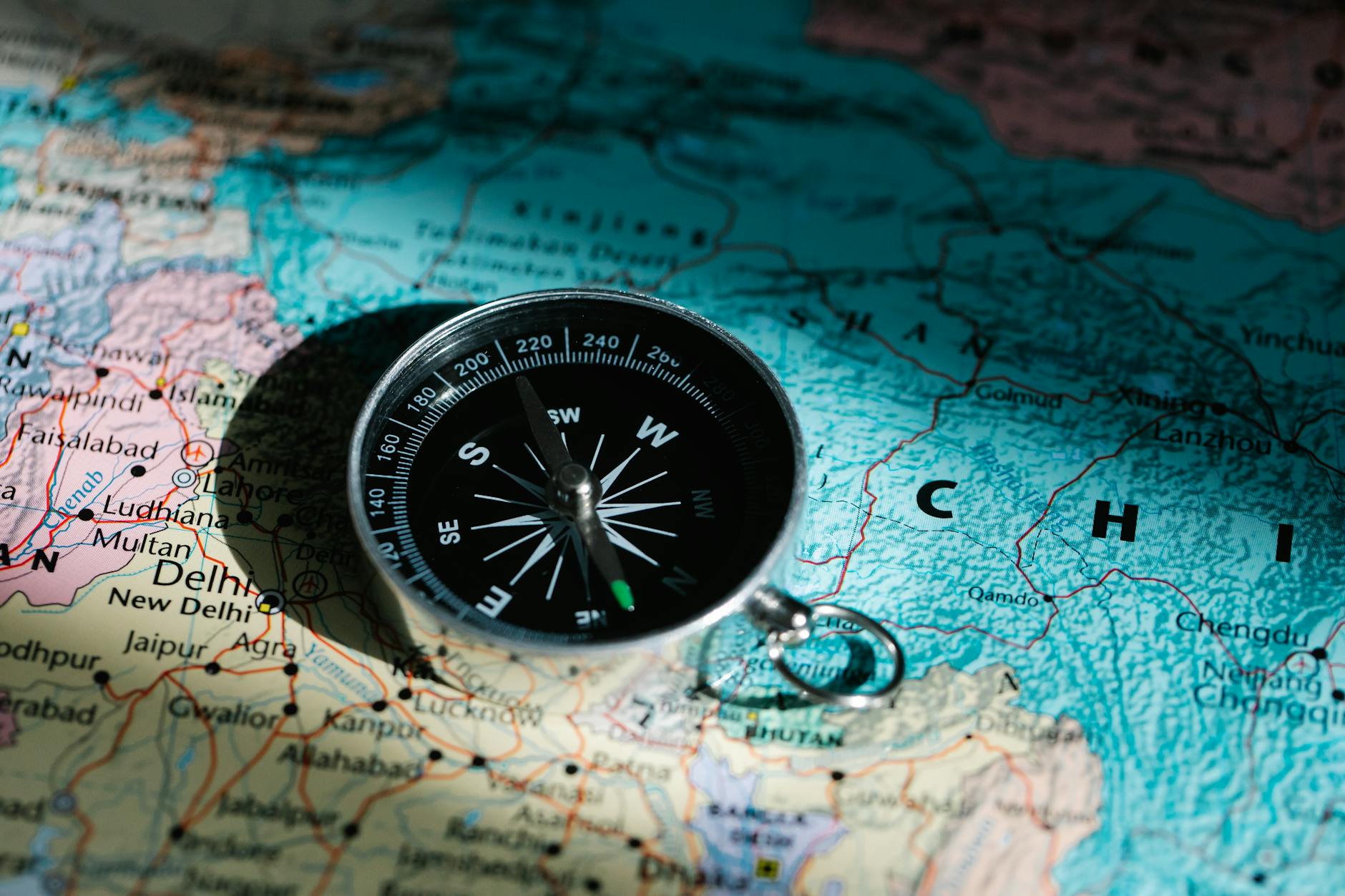
Over a recent conversation, I found myself thinking deeply about the transformations that South Asia has undergone through the centuries—especially under the Mughals and the British. The landscape we see today, especially in regions like Pakistan and India, is in many ways shaped by these historical powers. But how do we evaluate their legacies—especially when each came with their own blend of contribution and control?
The River That Remembers
A recent video of flooding in Park View City, Lahore, led me to think about how rivers, in their essence, have memory. The Ravi, for instance, once had a different course, and it seems that during extreme floods, it tends to reclaim its old path. Nature doesn’t forget. When we build homes, cities, or even empires on land that was once claimed by rivers, we often ignore what was naturally there. This brings into question the very foundation of planning and urban development.
Infrastructure: A Legacy of Empire?
From there, my mind wandered into history—especially the British presence in South Asia. We often hear that they “looted” the region, but there’s also undeniable evidence of lasting infrastructure: railways, canals, irrigation systems, and educational structures. The irony is that while these were built to serve colonial interests, they also formed the foundation of modern Pakistan and India’s governance and economic systems.
So I ask myself: Is it fair to view them purely as looters? Or were they, like all great empires, trying to entrench their power in a way that also built lasting systems?
But What About the Mughals?
Before the British, the Mughals ruled much of the subcontinent. Most people today remember them for their architecture—Taj Mahal, Lahore Fort, and other majestic structures. But they did much more than just build monuments.
Under emperors like Akbar, they introduced formal land revenue systems and bureaucratic governance (e.g., the Mansabdari system). Roads, trade routes, and caravanserais boosted regional commerce. Though their administration wasn’t Western in structure, it was advanced in its own way, built for a different kind of society.
Yet, we often overlook their contributions because the British system left more visible, functional traces like bridges, railway lines, and irrigation canals.
Is It Just About What Lasted?
It’s easy to value what we can still see and use—like a railway line or a dam. But is that the only measure of a legacy?
Traditional Islamic madrasas, for example, were a vital part of education long before the British brought formal schooling systems. They taught religion, logic, philosophy, law, and even science. These systems were part of a lifestyle and worldview—holistic and integrated into society. Just because they didn’t follow a “Western model” doesn’t make them primitive or irrelevant.
The British formalized education in English, for their own convenience, of course. But they also created a class of locals who were fluent in that language, shaping governance, business, and law for generations to come.
Empire and Interest: A Universal Pattern?
At the end of it all, I’m left thinking—every empire has extracted resources. From Rome to Britain to modern global powers, none are innocent in this regard. The British used South Asia for economic benefit, but so did local rulers in their own way. Maybe that’s just how empires work—building where it benefits them, exploiting where they can, and inadvertently leaving behind systems that outlive them.
So perhaps the better question is not whether they helped or looted, but what we did—and continue to do—with what they left behind.
Final Thoughts
History is never black and white. It’s layered, complicated, and personal. Reflecting on the past helps us make sense of the present—not just to blame or glorify, but to understand.
If you’ve ever felt the same—torn between pride in your heritage and frustration at your history—know that it’s okay. These reflections are part of the journey to make sense of where we come from, and where we go next.
 Wasifreflects