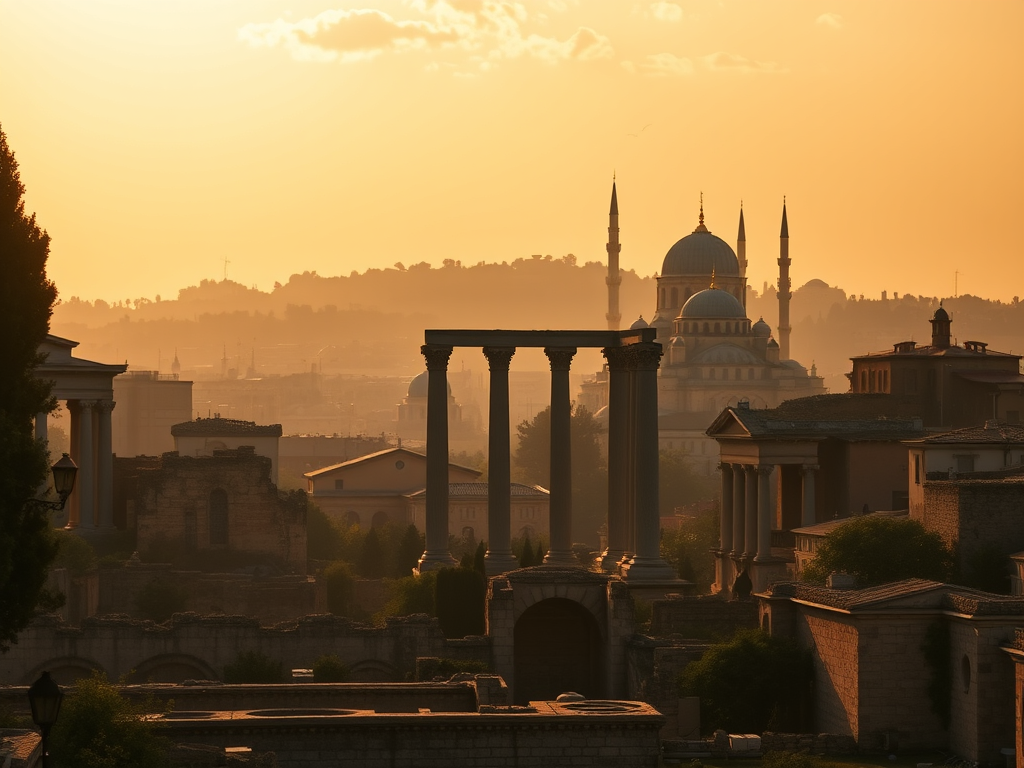
🌍 The Empire That Built the World
The story of Rome is one of the most extraordinary journeys in human history — a small settlement in Italy that became the most powerful empire the world had ever seen.
It built roads that still exist, wrote laws that inspired modern justice, and designed cities that remain models for urban life today.
But like all great civilizations, Rome’s glory was not eternal. It fell not with a single battle, but through slow decay — weakened by corruption, overexpansion, and moral decline.
⚖️ Rome Before Islam
By 476 AD, the Western Roman Empire had already collapsed. Yet its twin — the Eastern Roman Empire, also called the Byzantine Empire — lived on from its capital Constantinople (modern-day Istanbul).
It continued Roman traditions for another thousand years, ruling lands that stretched from Greece to Egypt.
So when Islam emerged in 610 AD, the Byzantines were still a global superpower.
⚔️ The Rise of Islam and the Clash with Rome
When the Prophet Muhammad (peace be upon him) began spreading the message of Islam, two empires dominated the known world: the Romans (Byzantines) in the west, and the Persians in the east.
After the Prophet’s passing, the early Muslim leaders — the Rashidun Caliphs — led with faith, unity, and justice. Within a few decades, their armies met the Romans in open battle.
Major Turning Points:
| Event | Year | What Happened |
|---|---|---|
| Battle of Yarmouk | 636 AD | Muslims under Khalid ibn al-Walid (RA) defeated the Byzantines, gaining control over Syria and Palestine. |
| Conquest of Egypt | 639–642 AD | Led by Amr ibn al-As (RA), the Muslims took Egypt from Roman rule. |
| North African Campaigns | 647–698 AD | The Muslims gradually took Libya, Tunisia, and the rest of North Africa. |
The Muslims didn’t destroy Rome — they succeeded it. They inherited the lands that the empire could no longer hold together.
🏰 The Last Chapter — Fall of Constantinople
The Eastern Roman (Byzantine) Empire survived for centuries longer, but it was finally brought to an end in 1453 AD.
Sultan Mehmed II, known as Mehmed the Conqueror, led the Ottoman Muslims in capturing Constantinople after a 53-day siege.
That moment ended over 2,200 years of Roman history — from the founding of Rome in 753 BC to the rise of Istanbul under Islam.
💭 The Lesson of Two Civilizations
The fall of Rome and the rise of Islam teach us a timeless truth:
“Empires rise through discipline and justice — they fall through arrogance and moral decay.”
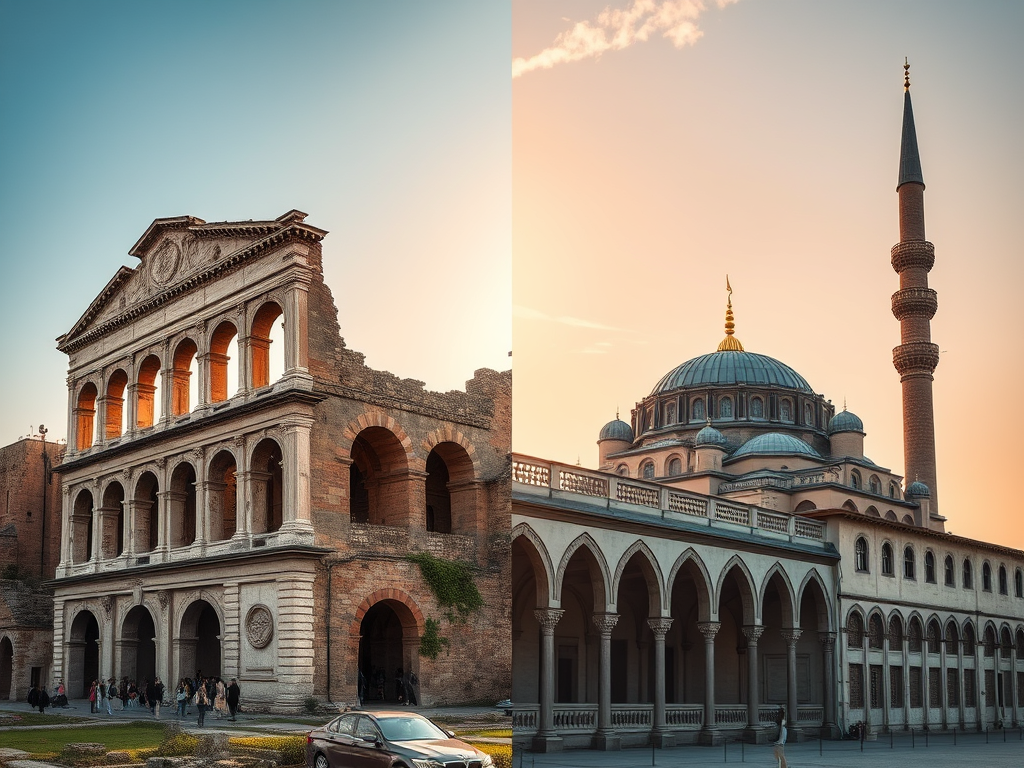
Rome had everything the modern world has — advanced technology, comfort, and wealth — yet it lost its spiritual purpose.
Islam, at its dawn, brought faith, equality, and unity — values that reshaped the world for centuries.
✨ Closing Reflection
History doesn’t repeat itself — but it rhymes.
The same forces that built and broke Rome — power, wealth, pride — still move our world today.
Perhaps, like the Romans, we too must learn to balance progress with purpose.
 Wasifreflects